

Live 7-Day Weather Forecast for Mauritius Island
Welcome to Paradise! 🌴
I’m so glad you’re planning a trip to our beautiful island. I get asked every day: “When is the best time to visit Mauritius?”
The honest answer? Anytime! Because we are a tropical island, we don’t have a “frozen” winter. We just have a “warm” season and a “hot” season.
The Striking Truth about Mauritius Weather:
Did you know that Mauritius has micro-climates? It can be pouring rain in the lush Center (Curepipe), while people are sunbathing in perfect 30°C heat just a few kilometers away on the West Coast (Flic en Flac).
Why listen to us?
At Taxi Service Mauritius, our team lives and breathes these roads every day. We don’t just look at satellite maps; we see the weather through our windshields. We’ve helped thousands of travelers—from honeymooners to business guests—find the sunshine even on “cloudy” days.
Here is what you need to know to plan like a pro:
- The “Hot & Lush” Season (Nov – April): Perfect for warm lagoons and tropical fruits, but keep an eye out for quick afternoon showers.
- The “Cool & Breezy” Season (May – Oct): Ideal for hiking, exploring, and world-class kitesurfing.
- The Sunset Secret: If you love golden hours, the West Coast is your best friend all year round!

Not sure which month fits your vibe? 🤔
Use our quick “Best time to visit Mauritius” tool below. Tell us what you love (beaches, business, or sunsets), and we’ll tell you exactly when to book your flight!
[mauritius_climate_quiz]
How the Climate in Mauritius Really Works?
Two Seasons: SUMMER & Winter
We don’t have snow, only “warm” and “hot” seasons.
- Hot & Humid (Nov–Apr): Warm seas, lush greens, and tropical showers. This includes the Jan–Mar cyclone window.
- Cool & Dry (May–Oct): Fresh air and stable skies—perfect for hiking and tours. You’ll wear T-shirts by day and perhaps a light jacket at night.
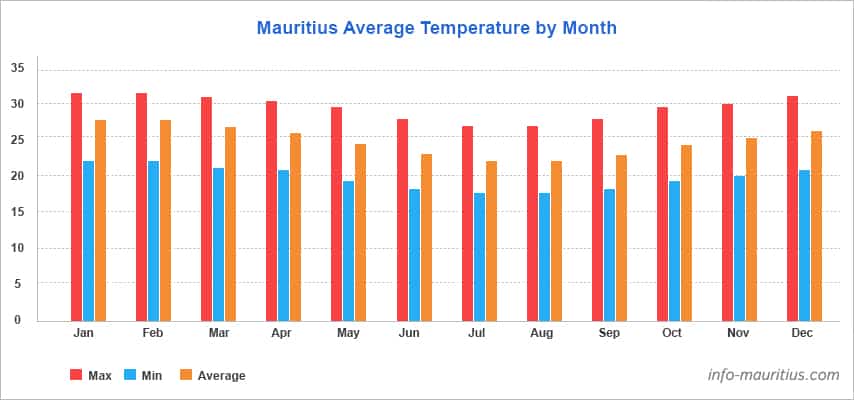
- Coastal Temps: Highs of 26–33°C and lows of 17–22°C mean you can swim all year round.
The Secret: Micro-Climates
Our mountains create “weather pockets.” While the Center might be misty and the East breezy, the North and West usually stay sunny and sheltered. As drivers, we use this secret every day: if it’s raining where you are, we usually know a beach just 20 minutes away where the sun is shining.
Climate in Mauritius by Month and Region 🗓️
Now that you understand the big picture, let’s get more precise.
Every traveler asks:
“What is the climate like in Mauritius in my month?”
Instead of just giving you one number for the whole island, we’ll show:
- Typical temperatures in °C for that month
- A simple description of the overall climate
- How each region (North, West, East, South, Center) usually feels
Use the selector below to see the climate in Mauritius for your travel month:
[mauritius_climate_by_month]
After you play with this tool, you’ll notice a pattern:
- Hotter, more humid, greener months: January to March
- Great “in‑between” months: April, May, October, November
- Cooler, drier, active months: June to September
And remember: if one region looks a bit windy or cloudy in your month, we can still plan your days so you chase the best weather around the island.
Mauritius Temperatures by Month (°C) 🌡️
To understand the climate in Mauritius at a glance, here is a simple table with average coastal temperatures for each month. These values match what locals feel on the beaches and in the lagoons.
Average Coastal Temperatures – Climate in Mauritius
| Month | Max (°C) | Min (°C) | Average (°C) |
|---|---|---|---|
| January | 33 | 22 | 28 |
| February | 32 | 21 | 27 |
| March | 30 | 21 | 27 |
| April | 30 | 20 | 26 |
| May | 29 | 19 | 24 |
| June | 27 | 18 | 22 |
| July | 26 | 17 | 21 |
| August | 26 | 17 | 22 |
| September | 27 | 18 | 24 |
| October | 30 | 19 | 28 |
| November | 31 | 20 | 25 |
| December | 33 | 22 | 27 |
How this feels in real life
January – March:
The climate in Mauritius is at its hottest and most humid. You’ll feel strong sun, warm sea and thicker air. Great for swimming and lush green scenery, but expect short, heavy showers and possible cyclone alerts.April – May:
Still warm, but humidity slowly drops. Many locals see this as one of the best times: comfortable for both beaches and day trips.June – August:
Our “winter”. Numbers look lower, but you will still be in T‑shirts most days on the coast. The air is fresher, great for hiking and full‑day tours. In the Center and on the East/South coasts it can feel cooler and windier, especially in the evening.September – October:
A fantastic period for the climate in Mauritius: sunny, mostly dry, and warming up again. Many repeat visitors love these months for a balance of good prices and great weather.November – December:
Getting hotter again, sea is warm, skies are often clear. The island feels festive and lively, especially in December. It’s a beautiful time, but it can be busy and quite hot in the middle of the day.
A useful rule:
Even when the air is at 21–24°C in winter, the lagoon often feels pleasantly warm, so you can still enjoy the sea almost every day.
A Local Way to Read This Table (Not Just Numbers)
Most websites stop at numbers. But people who live here read this temperature table very differently. When we think about the climate in Mauritius, we don’t just see Max / Min / Average. We see three things working together:
- The month on the table
- Which coast you are on (North, West, East, South, Center)
- The time of day you are outside
For example, that “Average 22°C” in June might sound cool on paper. But a local instantly knows this:
- In the Center in early morning, it can feel fresh and misty. You may want a light jacket.
- On the West Coast at 2 pm, the same day feels like a perfect soft‑sun beach day.
- On the East Coast, the wind makes the same 22°C feel cooler on wet skin after swimming.
So the table above is not just a list of temperatures. It is a map of comfort:
- From about 24–29°C, most visitors feel “ideal holiday weather” for the beach.
- Below that, it is great for hiking, road trips and city visits (you walk more and sweat less).
- Above that, it is classic tropical time – warm lagoon, strong sun, great for swimming, but you need shade and sunscreen.
Our drivers and travel agents use this kind of reading of the climate in Mauritius every day. We look at the month on your booking, then combine it with where you stay and what time your tours run. That is how we suggest small changes like:
- “In July, let’s keep your hiking in the morning and your West Coast sunset drive later.”
- “In February, let’s start your South tour a bit earlier to avoid the heaviest afternoon heat.”
This way, the same numbers you see in the table become real decisions: which coast, which hour, which activity. That is the kind of local thinking you almost never see on big weather websites—but it is exactly how to get the best from the climate in Mauritius.
Best Time to Visit Mauritius for Beaches, Honeymoons, Kitesurfing, Hiking & Business

Now that you understand the climate in Mauritius by month and by region, let’s make it practical. Here is when locals, drivers and repeat visitors think the island really shines for different types of trips.
Best Time for Beaches & Swimming
If your dream is to spend long days on soft sand and in warm lagoons, the good news is:
you can swim all year. But some months are easier and more comfortable than others.
Best overall beach months:
- April, May, October, November
- Also very good: September and early December
Why these months?
- Sea is warm and inviting.
- Air is hot enough for swimming, but not always “too heavy” or extreme.
- Less wind on many days compared to the middle of winter (June–August).
- Long, bright days with plenty of sunshine for tanning and lagoon time.
If you come in the hotter, wetter months (January–March):
- You still get excellent swimming conditions and very warm water.
- Just expect short, heavy showers and more humidity.
- Our tip as locals: plan beach time earlier in the day, and keep a flexible plan so we can shift your route if a big cloud sits over one side of the island.
Best Time for Honeymoons & Romantic Trips
Honeymooners usually ask for three things:
- Good chance of sunshine
- Comfortable temperatures
- Beautiful sunsets
For romance, the West Coast is the star, because it faces those long golden sunsets over the ocean.
Sweet-spot months for honeymoons:
- April – June
- September – November
- December (romantic and festive, but hotter and busier)
In these months, the climate in Mauritius gives you:
- Warm days for the pool and beach
- Pleasant evenings for dinners outside
- Great light for sunsets, especially on the West Coast (Flic en Flac, Tamarin, Le Morne side)
If you don’t like strong wind, try to:
- Avoid the windiest East/South coasts in the heart of winter (July–August)
- Choose West or North for calmer evenings and sunsets
Our local tip:
Tell us you’re on honeymoon when you book your transfers or tours. We often adjust timings a little so you can catch the best sunset viewpoint on your chosen day.
Best Time for Kitesurfing & Wind Sports
For kitesurfers and wind lovers, the climate in Mauritius is a dream.

The East and South‑East coasts are world‑famous for steady tradewinds and big open lagoons, especially around Le Morne and spots like Belle Mare.
Top months for kitesurfing and wind sports:
- June, July, August, September
You can still kite outside these months, but this period usually offers:
- Stronger, more reliable wind
- Cooler air (you may want a thin wetsuit)
- Great wave conditions in some spots
If you’re bringing non‑kiting family or friends:
- Consider staying on the West and driving to wind spots on your kite days.
The West can be sunnier and calmer for the rest of the group, while you still enjoy top sessions.
Our drivers are used to early‑morning and late‑afternoon kitesurf transfers, and we know which coasts are usually best for given wind directions.
Best Time for Hiking, Sightseeing & Road Trips
If you want to explore viewpoints, waterfalls, viewpoints like Chamarel, and local villages without melting in the heat, you’ll love the cooler, drier season.

Best months for active exploring:
- May, June, July, August, September, October
Why this works well:
- Lower humidity → you sweat less when walking.
- More stable weather → fewer heavy afternoon storms.
- The climate in Mauritius is comfortable for full‑day tours, not just half days.
These months are perfect for:
- Hiking Le Morne, Black River Gorges and other trails
- Visiting viewpoints, tea plantations, rum distilleries
- Long scenic drives around the island
Local tip:
Even in these cooler months, the sun is strong. Bring a hat, sunscreen and a light layer for the wind, especially if you’re going to the high plateau or the South and East coasts.
Best Time for Business Travel & Short Stays
For business travelers, the “best time” is more about comfort, traffic and access than beaches only.
The good news: you can come for work any month and still enjoy pleasant evenings and at least a bit of sea or pool time.
Best months for business comfort:
- April – June
- September – early November
Temperatures are not extreme, and the climate in Mauritius makes suit‑and‑shirt days more comfortable.
Best regions to stay for business:
- Center or West – because:
- You’re close to business areas and can reach many parts of the island faster.
- From much of the West Coast, you can be in key business zones in about 20–40 minutes, depending on traffic.
Many of our regular business guests like this pattern:
- Stay on the West Coast for sunsets and sea views.
- Use private transfers or chauffeured cars to go to meetings in Port Louis, Ebene or other business areas.
- Plan flights and transfers at times that avoid the heaviest traffic; we help you choose these times based on local experience, not just Google Maps.
Packing Tips for the Climate in Mauritius
Once you know when you’re coming, packing becomes easier. Here’s a simple guide based on the two main parts of our year.

What to Pack: November – April (Hot & Humid Season)
- Light, breathable clothing (cotton/linen T‑shirts, shorts, dresses)
- Strong sun protection: hat, sunglasses, reef‑safe sunscreen
- Swimwear and light cover‑ups
- Flip‑flops or sandals + a pair of comfortable walking shoes
- A light rain jacket or umbrella for short showers
- Insects repellent, especially if you’re sensitive
If you plan to spend time in the Center or do a lot of day tours, add:
- One light long‑sleeve layer for air‑conditioned places and cooler evenings.
What to Pack: May – October (Cooler & Drier Season)
- T‑shirts and light trousers/shorts for daytime
- A light jumper, hoodie or jacket for evenings, especially in the Center or on the East/South coasts
- A windproof layer if you’re kitesurfing or doing boat trips
- Closed shoes for hikes and nature walks
- Same sun protection as always – the UV is strong even when the air feels cool
Local rule of thumb:
If you’re staying on the West Coast only, you’ll wear light clothes most of the time.
If you’re staying in the Center or doing many tours inland, always pack at least one warm, light layer.
Cyclone Season, Rainy Days & Safety
When people research the climate in Mauritius, the cyclone season is often what worries them most. Here’s a calm, experience‑based view.

When is cyclone season in Mauritius?
- Official cyclone season: December to May
- Peak risk: January to March
Most days in this period are normal tropical days: hot, humid, sometimes with short heavy showers. Only a small number of systems each year come close enough to bring real cyclone conditions.
Mauritius uses a clear Class 1–4 warning system. As the class number increases, schools and businesses close, and people are told to stay indoors. Hotels and local service providers follow these bulletins closely.
What do visitors actually need to do?
You don’t need to “manage” a cyclone like a homeowner. You just need to be prepared and follow local guidance.
If a cyclone is on the way:
- Listen to your hotel or host – they know the building and safety plan.
- Charge devices early – phone, power bank, laptop.
- Keep a small kit ready – bottled water, snacks, medicines, torch, copies of documents.
- Bring balcony items inside – light chairs, umbrellas, loose objects.
During strong conditions:
- Stay indoors, away from big windows and the sea.
- Avoid flooded streets and rivers.
- Use your phone or radio to follow official updates, but save battery.
After the storm:
- Be patient: some roads, power or water may need time to return to normal.
- Ask your hotel if tap water is safe to drink; use bottled if in doubt.
- Avoid walking through standing water.
How do we use this in our daily work?
At Taxi Service Mauritius, our team has experienced many cyclone seasons on the road:
- We track official meteorological bulletins and road conditions.
- We reschedule or reroute transfers and tours when safety is an issue.
- We inform guests so you are not waiting outside in bad weather or on closed roads.
So while cyclones are a real part of the climate in Mauritius, for most visitors, they are simply a short pause in the trip, managed with clear local procedures and experienced teams looking after you.
Make the Most of Mauritius with Taxi Service Mauritius
Now you know:
- When the climate in Mauritius is best for your type of trip
- Where on the island do different weather patterns appear
- How temperatures and wind really feel in daily life
The last piece is how you move around.
With Taxi Service Mauritius, you can:
- Save money compared to many hotels and individual taxis
- Travel with trained, courteous drivers who respect your time
- Avoid unplanned souvenir shop stops (our drivers are not allowed to do this)
- Pay cash to the driver or securely online
- Rely on a 5‑star rated local company trusted by thousands of visitors
Because we spend every day on these roads in all seasons, we use our local knowledge of the climate in Mauritius to help you:
- Choose the right coast for your free days
- Time your airport transfers to avoid the worst traffic and weather
- Plan sightseeing tours on the brighter side of the island whenever possible
You can now:
- Book your airport transfers
- Explore our sightseeing tours
- Or simply contact us with your travel dates and we’ll suggest the best way to match your plans with the island’s weather.